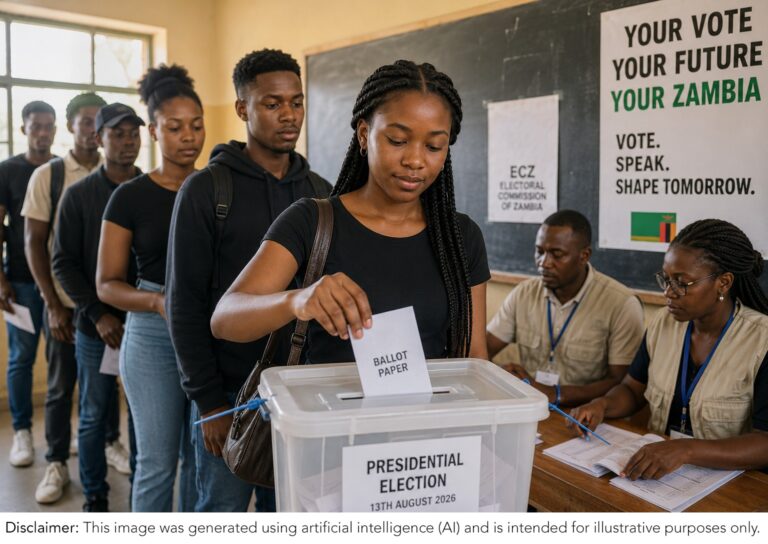

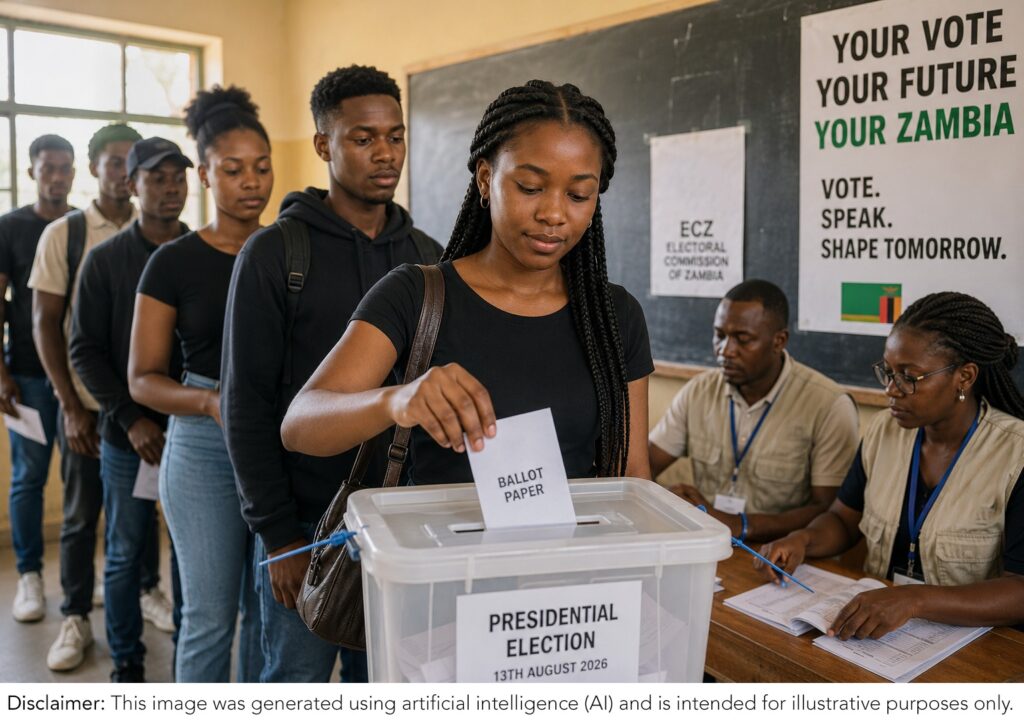
The votes have been counted. The results are in, the inauguration of the elected president being underway. Zambia has a government for the next term, and the campaign posters are already coming down. But before we move on to the next news cycle, it’s worth sitting with a number that mattered more than any single name on a ballot paper.
According to the Electoral Commission of Zambia (ECZ), of the 8,786,300 Zambians registered to vote in the 2026 election, 4,066,423, that is, 46.3%, were young people between the age of 18 and 35. That is not a youth “segment” of the electorate. That was close to half of it.
That number didn’t disappear when the polling stations closed. If anything, it matters more now.
What this election proved
For years, young people have been talked about as the future of Zambian politics, the generation to “prepare” for leadership, to “empower,” to “engage” someday. This election proved that the future arrived a while ago. Youth were not a demographic courted at the margins with T-shirts and rally appearances. They were, and are, the electorate.
That changes incentives permanently, not just for one campaign season. A near-majority youth register means no government can realistically govern by ignoring the issues young Zambians live with, such as unemployment, the cost of starting a business or a family, access to skills and capital, mental health and safety nets, and a fair shot at opportunity outside of political connections. Numbers like these do not just win elections; they set up the terms for what comes after.
Which brings us to the part that matters most now that the results are declared: accountability. A government elected substantially on the strength of youth turnout inherits a specific obligation, to deliver for the people who elected it, and to be measured by that delivery continuously, not just at the next campaign.
What this asks of young voters, now
Casting a ballot was the easiest part of civic participation. What comes after is where a demographic majority turns into real, lasting influence. A few things matter here:
- Keep watching, not just waiting. The work of an elected official starts the day they’re sworn in, not the day before the next election. Follow how promises made on the campaign trail translate, or don’t, into budgets, appointments, and policy.
- Guard against misinformation, election season, or not. The discipline to verify before sharing doesn’t end when the votes are counted. Misinformation about governance, budgets, and policy will keep circulating on WhatsApp and social media, and verifying before sharing is still a civic act.
- Show up beyond the ballot box. Attending public forums, engaging local leaders, following up on campaign promises, and holding elected officials accountable between elections is where this really counts. Democracy isn’t a single day every few years, it’s the everyday in between.
- Stay engaged locally, not just nationally. Ward councilors and local leadership shape daily life, roads, markets, clinics, waste collection, often more directly than national politics. The same scrutiny young voters applied to the presidency belongs at the ward and constituency level too, especially now.
- Start preparing for what’s next. Civic responsibility isn’t only about watching others govern. It’s also about registering new voters as they turn 18, joining community structures, running for local office, and building the pipeline of engaged young leadership for the elections still to come.
Why this matters to us
At Copper Rose Zambia, we have spent years working alongside young people, not as a group to be spoken for, but as a constituency with the numbers, the voice, and increasingly the platform to shape the country’s direction. This election proved something we have always believed: Zambia’s youth are not waiting for a seat at the table. Demographically, they are the table.
The question was never whether young people could shape Zambia’s political future. The register already answered that. The question now is what young people choose to do with that power, in this term, and everyone after it.
Civic duty didn’t end when the ballot was cast. It becomes the harder, quieter work of watching, asking, and following up: track how your ward councilor and MP vote, show up when local budgets are discussed, and hold every campaign promise against what gets delivered. The register proved the numbers. The next five years will prove the follow-through, and that follow-through starts with us.